

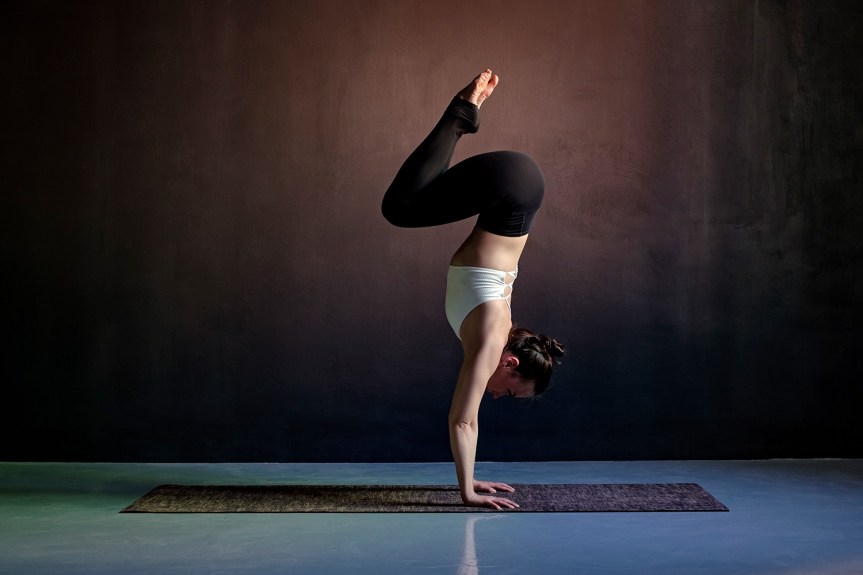
Vinyasa yoga is often described as the art of moving meditation, but beneath its flowing movements lies a deeper dimension—communication without words. Every inhale, every exhale, every shift from one pose to another forms a silent conversation between the body and the mind. In a world where noise dominates attention, the quiet intelligence within vinyasa yoga offers something profoundly different: the ability to listen through motion.
Understanding the Language of Movement
When a practitioner moves through vinyasa, they are not merely stretching muscles or controlling breath. Each transition carries emotional and psychological expression. The body becomes a language, capable of expressing tension, release, resistance, and acceptance without a single word.
In traditional dance therapy, this is known as kinesthetic empathy—the ability to feel what others express through movement. Vinyasa operates on a similar principle, where flow is not just internal but relational. Practising next to others in a class builds a subtle form of synchrony, where movements naturally harmonise. This rhythm creates a shared emotional field that connects people beyond verbal communication.
The Role of Silence in Flow
Silence in vinyasa is not absence but presence. When an instructor allows space between cues, practitioners begin to sense rather than follow. This absence of constant instruction encourages intuition to lead the practice. The mind shifts from “doing” to “being.”
Silence also sharpens spatial awareness. Without verbal direction, the body reads environmental cues—the sound of a mat creasing, the rhythm of another’s breath, the shift of weight on the floor. These sensory signals enhance proprioception, allowing smoother, more organic transitions.
Mirror Neurons and the Energy of Collective Practice
Neuroscientific research shows that the brain contains mirror neurons—cells that activate both when performing an action and when observing someone else doing it. This explains why practising vinyasa in a group feels energising even without conversation. The body subconsciously imitates, aligns, and adapts to the movement patterns around it.
This process builds an invisible emotional bridge between practitioners. A well-timed inhale can ripple through an entire class like a wave. Even without music or words, there’s rhythm, communication, and unity. This synchronisation explains why many practitioners leave class feeling deeply connected, though no one may have spoken.
The Subtle Dialogue Between Breath and Motion
Every vinyasa class is an unspoken negotiation between body capacity and mental intention. The practitioner listens to their inner dialogue—the soft strain of muscles, the heartbeat’s tempo, the rise and fall of energy levels.
This silent conversation is what transforms vinyasa from exercise into self-awareness. When breath and motion align perfectly, a flow state emerges. In this state, cognitive control dissolves, and instinct takes over. The body speaks fluently while the mind listens.
Emotional Expression Through Physical Flow
Movement has long been a medium for emotional release. Psychologists note that when words cannot express inner conflict, physical expression can complete the communication loop. Vinyasa’s dynamic flow invites this process naturally.
-
Forward folds symbolise humility and surrender.
-
Backbends express vulnerability and openness.
-
Twists represent transformation and letting go.
-
Balancing poses mirror emotional stability amidst challenge.
When performed mindfully, these poses become an emotional language unique to each individual. The body tells its truth through rhythm and structure, allowing release without explanation.
Teaching Through Resonance, Not Instruction
Many seasoned instructors at Yoga Edition understand that the most powerful teaching moments happen without speaking. Instead of filling silence with commands, they use pauses to encourage internal listening. A single gesture, a shared gaze, or a soft nod can communicate more than words ever could.
Students respond to these cues not with obedience but with resonance. This teaching style transforms the class into a dialogue of awareness, where everyone participates in the shaping of collective silence.
The Architecture of Non-Verbal Cues
Beyond stillness, non-verbal communication in vinyasa manifests through physical and spatial design. Instructors communicate timing, rhythm, and intention through movement itself. A slowed transition invites mindfulness, while a continuous pace encourages endurance and focus.
The architecture of space also plays a role. Distance between mats, light angles, and air circulation subtly affect how movement feels. These elements become part of the conversation between practitioner and environment.
Silence as a Tool for Nervous System Regulation
Silence does more than deepen awareness; it recalibrates the nervous system. Without external noise, the parasympathetic system activates, reducing heart rate and promoting recovery. This is why practitioners often describe post-vinyasa stillness as “peaceful exhaustion.”
The body exits fight-or-flight and enters a state of grounded balance. Silence, in this sense, is not emptiness but healing.
Rediscovering Trust Through Silent Practice
Trust is another hidden dimension of vinyasa’s unspoken language. Practising without constant verbal correction builds self-reliance. You begin to trust your internal rhythm, your balance, your instinct to adjust. Over time, this confidence extends beyond the mat.
Silent vinyasa teaches that communication does not always require articulation. Relationships, leadership, and self-reflection all improve when listening outweighs speaking.
Integrating Silent Flow into Daily Life
Taking the principles of silent vinyasa off the mat transforms daily interactions. It teaches patience in conversation, empathy through observation, and awareness of subtle cues. The same listening cultivated during transitions between asanas applies to how we move through crowded MRT stations or interact at work.
Every pause becomes a choice rather than a reaction.
Practising the Choreography of Silence
To experience the unspoken language of vinyasa more deeply, try these approaches:
-
Attend a no-music, minimal-instruction class once a week. Notice how your focus shifts inward.
-
Practise mirroring another practitioner’s movements silently, focusing on breath alignment.
-
Journal post-class sensations, not in words but through drawing or movement memory sketches.
-
Observe your instructor’s gestures during practice; often, energy transmission happens through motion alone.
These small experiments heighten your perception of silent communication.
The Future of Silent Vinyasa
As yoga continues to evolve, silence may become its next frontier. Instructors around the world are designing “quiet classes” that rely entirely on gesture, body language, and intuitive pacing. Singapore’s fast-paced urban rhythm makes this especially appealing—people crave stillness not as escape but as reconnection.
By learning to communicate through presence rather than performance, vinyasa becomes not just a workout but an act of listening. The silence within movement reveals that awareness is the purest form of expression.
FAQs
Q1: Is practising vinyasa yoga in silence difficult for beginners?
It can feel unusual at first because most classes rely on verbal guidance. However, once you focus on your breath and internal rhythm, silence becomes grounding rather than intimidating.
Q2: Can silent vinyasa be practised at home without guidance?
Yes, but start by memorising short sequences. This allows you to flow without constantly checking a reference. Over time, intuition replaces structure.
Q3: How does group silence affect energy in a shared class?
Collective silence amplifies group focus. Everyone becomes more aware of subtle sounds like breath and mat movement, creating a shared rhythm that enhances emotional connection.
Q4: Is silence useful for managing anxiety during yoga?
Yes, silence triggers parasympathetic activation, which lowers cortisol and reduces anxious thought loops. The body finds calm through sensory withdrawal.
Q5: Why do some instructors prefer minimal verbal instruction?
They aim to cultivate self-trust and embodied awareness. Fewer words encourage practitioners to interpret poses through personal experience rather than mimicry.
Through the choreography of silence, vinyasa yoga reveals its truest essence—not as movement for fitness, but as motion that speaks in stillness. In each pause, the body listens, responds, and remembers what language often forgets.

 Proz Health